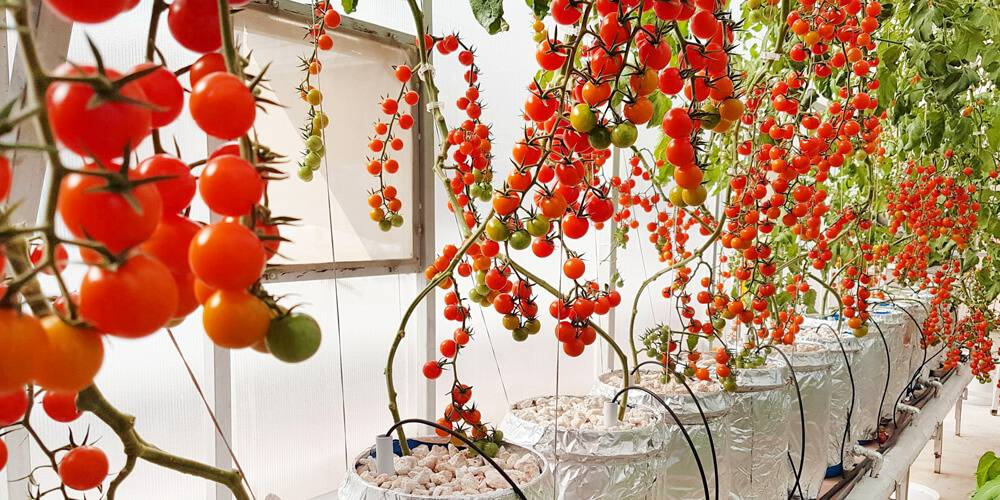
Comparing Nutrient Solutions for Hydroponic Tomatoes
When growing tomatoes hydroponically, one of the most critical decisions you’ll make is choosing the right nutrient solution. The composition of your nutrient solution can dramatically affect both the quantity and quality of your harvest. In this post, I’ll examine different nutrient formulations that have been tested in scientific studies and discuss how they impact tomato production in soilless systems.
Understanding Nutrient Solution Basics
Before diving into specific formulations, it’s important to understand that tomato plants have changing nutritional needs throughout their growth cycle. Research has shown that early in the season, excessive nitrogen can cause plants to become too vegetative, resulting in bullish growth that produces misshapen fruits and increases susceptibility to disease (1). High potassium levels can also create problems by interfering with calcium and magnesium absorption, leading to blossom end rot.
Most successful nutrient programs divide the growing season into distinct stages. The seedling stage requires lower concentrations of nutrients, particularly nitrogen, while mature fruiting plants need substantially higher levels of most nutrients to support both vegetative growth and fruit development (2).
Comparing Two Common Formulations
Research has established several effective nutrient formulations for hydroponic tomatoes. I’ll compare two well documented approaches that represent different philosophies in nutrient management.
| Nutrient | Arizona Formula (Seedling) | Arizona Formula (Fruiting) | Florida Formula (Early) | Florida Formula (Late) |
|---|---|---|---|---|
| Nitrogen (N) | 113 ppm | 144 ppm | 60 to 70 ppm | 150 to 200 ppm |
| Phosphorus (P) | 62 ppm | 62 ppm | 39 ppm | 39 ppm |
| Potassium (K) | 199 ppm | 199 ppm | 200 ppm | 300 to 400 ppm |
| Calcium (Ca) | 122 ppm | 165 ppm | 150 to 200 ppm | 150 to 200 ppm |
| Magnesium (Mg) | 50 ppm | 50 ppm | 48 ppm | 48 ppm |
The Arizona formulation (2) maintains relatively consistent macronutrient levels between growth stages, with only modest increases in nitrogen and calcium as plants mature. In contrast, the Florida approach (1) uses much lower nitrogen during early growth to prevent bullishness, then dramatically increases both nitrogen and potassium during fruit production.
Micronutrient Requirements
While macronutrients often receive the most attention, micronutrients are equally essential for healthy tomato production. These elements remain fairly constant throughout the growing cycle (2). Standard micronutrient concentrations for hydroponically grown tomatoes include iron at 2.5 ppm, manganese at 0.62 ppm, boron at 0.44 ppm, zinc at 0.09 ppm, copper at 0.05 ppm, and molybdenum at 0.06 ppm.
| Micronutrient | Concentration (ppm) |
|---|---|
| Iron (Fe) | 2.5 |
| Manganese (Mn) | 0.62 |
| Boron (B) | 0.44 |
| Zinc (Zn) | 0.09 |
| Copper (Cu) | 0.05 |
| Molybdenum (Mo) | 0.06 |
The Impact of Nitrogen Supply on Quality
Research on nitrogen management has revealed some surprising findings. A study examining nitrogen supply at different growth stages found that increasing nitrogen from 140 to 225ppm during the vegetative stage increased protein, vitamin C, and sugar content in fruits (3). However, the effect on lycopene and beta-carotene depended heavily on the potassium supply during the reproductive stage.
Other research examining lower nitrogen levels has shown that minimal nitrogen supply can actually enhance lycopene content in tomato fruits, particularly when coupled with sufficient water supply (4). Studies in hydroponic culture have demonstrated that either the lowest or medium levels of nitrogen application produced the best lycopene content, suggesting that optimal nitrogen levels for antioxidant production may be lower than those for maximum yield.
Potassium’s Role in Fruit Quality
Potassium plays a fundamental role in determining tomato fruit quality. Research has demonstrated that increasing potassium supply during the reproductive stage significantly enhances sugar concentration, vitamin C content, protein levels, lycopene, and beta-carotene in tomato fruits (3). The effect is particularly pronounced when potassium levels increase from 200 to 500ppm.
Another comprehensive study found that high proportions of potassium in the nutrient solution increased quality attributes including fruit dry matter, total soluble solids content, and lycopene content (5). However, these same researchers found that high proportions of calcium improved tomato fruit yield and reduced the incidence of blossom end rot, highlighting the importance of balancing these two nutrients.
Electrical Conductivity Management
One of the most innovative approaches to nutrient management involves carefully controlling the electrical conductivity (EC) of the nutrient solution. A study in closed NFT (Nutrient Film Technique) systems examined three different EC replacement set points: 5, 7.5, and 10 mS/cm (6). Remarkably, the highest EC replacement set point produced yields equivalent to lower EC treatments while significantly improving fruit quality.
The higher EC replacement threshold resulted in better dry matter content and total soluble solids in berries. Additionally, it demonstrated superior environmental sustainability by reducing total nutrients discharged into the environment by 37% compared to the medium EC treatment and 59% compared to the low EC treatment (6). This approach challenges conventional thinking about salinity stress in tomato production.
Calcium Management and Blossom End Rot
Calcium nutrition presents one of the most common challenges in hydroponic tomato production. Blossom end rot, characterized by dark lesions on the blossom end of fruits, results from calcium deficiency in developing fruits. However, this deficiency often occurs even when calcium levels in the nutrient solution appear adequate (1).
The problem frequently stems from antagonism between nutrients. Excessive potassium in the nutrient solution can interfere with calcium uptake by plant roots. This is particularly problematic early in the season when using pre-mixed fertilizers that contain high potassium levels. Growers working with water containing less than 50 ppm calcium need to be especially cautious about potassium concentrations.
To minimize blossom end rot, it’s critical to maintain calcium levels between 150 and 200 ppm while keeping early season potassium levels moderate. Some growers supplement calcium nitrate with calcium chloride to increase calcium availability without adding more nitrogen. Each pound of calcium chloride (36% Ca) in 30 gallons of stock solution increases calcium concentration by approximately 14 ppm in the final nutrient solution when injected at a 1% rate (1).
Effects on Yield and Quality Parameters
The differences between nutrient formulations can significantly impact both yield and fruit quality. Research consistently shows that inadequate nitrogen during fruiting stages produces lower yields, though the fruits may have better sugar content and flavor. Conversely, excessive nitrogen can produce abundant foliage at the expense of fruit production (4).
Potassium levels have a pronounced effect on fruit quality parameters. Adequate potassium improves fruit firmness, color development, and sugar content (3). However, excessive potassium can lead to calcium and magnesium deficiencies that compromise both yield and quality.
The timing of nutrient adjustments also matters significantly. Studies have shown that gradually increasing nutrient concentrations as plants transition from vegetative to reproductive growth produces better results than sudden changes in formulation. Plants that experience consistent, appropriate nutrition throughout their lifecycle typically show improved yields and more uniform fruit quality (6).
Practical Considerations
When implementing a nutrient program, several practical factors deserve consideration. Water quality plays a fundamental role in determining how much of each nutrient to add. Wells in many regions naturally contain significant calcium and magnesium, sometimes providing 40 to 60 ppm calcium (1). These naturally occurring nutrients should be factored into your formulation calculations.
The pH of your nutrient solution also affects nutrient availability. Research has established that maintaining pH between 5.5 and 6.0 ensures optimal nutrient uptake (2). Water with high alkalinity requires acidification, which can be accomplished using phosphoric acid or sulfuric acid depending on your phosphorus requirements.
The type of hydroponic system you’re using may also influence your nutrient concentrations. Systems requiring fewer daily irrigation cycles may need higher nutrient concentrations to ensure plants receive adequate nutrition. The general principle is that nutrient concentrations should be higher in systems with less frequent fertigation compared to those with continuous or very frequent feeding (1).
Advanced Management: The Transpiration-Biomass Ratio
One of the most sophisticated approaches to nutrient management involves calculating a recovery solution based on the transpiration-biomass ratio (6). This method recognizes that the relationship between water use and dry matter production changes throughout the growing cycle.
Research has shown that the transpiration-biomass ratio is high early in the crop cycle (approximately 300 liters per kilogram of dry weight), decreases during mid-season to a relatively stable phase, and then increases again late in the season (up to 400 liters per kilogram). This pattern suggests that nutrient concentrations should be adjusted accordingly: lower concentrations in the first and last phases, and higher concentrations during the middle phase when biomass accumulation is most rapid.
Conclusion
Successful hydroponic tomato production requires careful attention to nutrient solution composition. While several proven formulations exist, the research clearly shows that no single approach works best for all situations. The Florida formulation with its conservative early nitrogen levels may be ideal for preventing bullishness in greenhouse production, while higher EC strategies can improve fruit quality in closed systems.
Key takeaways from the scientific literature include: maintain nitrogen between 60 and 70 ppm early in the season to prevent excessive vegetative growth, increase potassium substantially during fruiting to enhance quality parameters, keep calcium between 150 and 200 ppm throughout the season while monitoring potassium levels to prevent antagonism, and consider that higher EC values (up to even 10 mS/cm) may be feasible limits for nutrient solution replacement in recirculating systems.
Starting with a well researched base formulation and making careful adjustments based on plant response, tissue analysis, and your specific growing conditions provides the most reliable path to optimizing both yield and quality in your hydroponic tomato crop. The scientific evidence demonstrates that nutrient management is not a one-size-fits-all proposition, but rather a dynamic process that should respond to both plant developmental stage and environmental conditions.